Historical Japanese Architecture
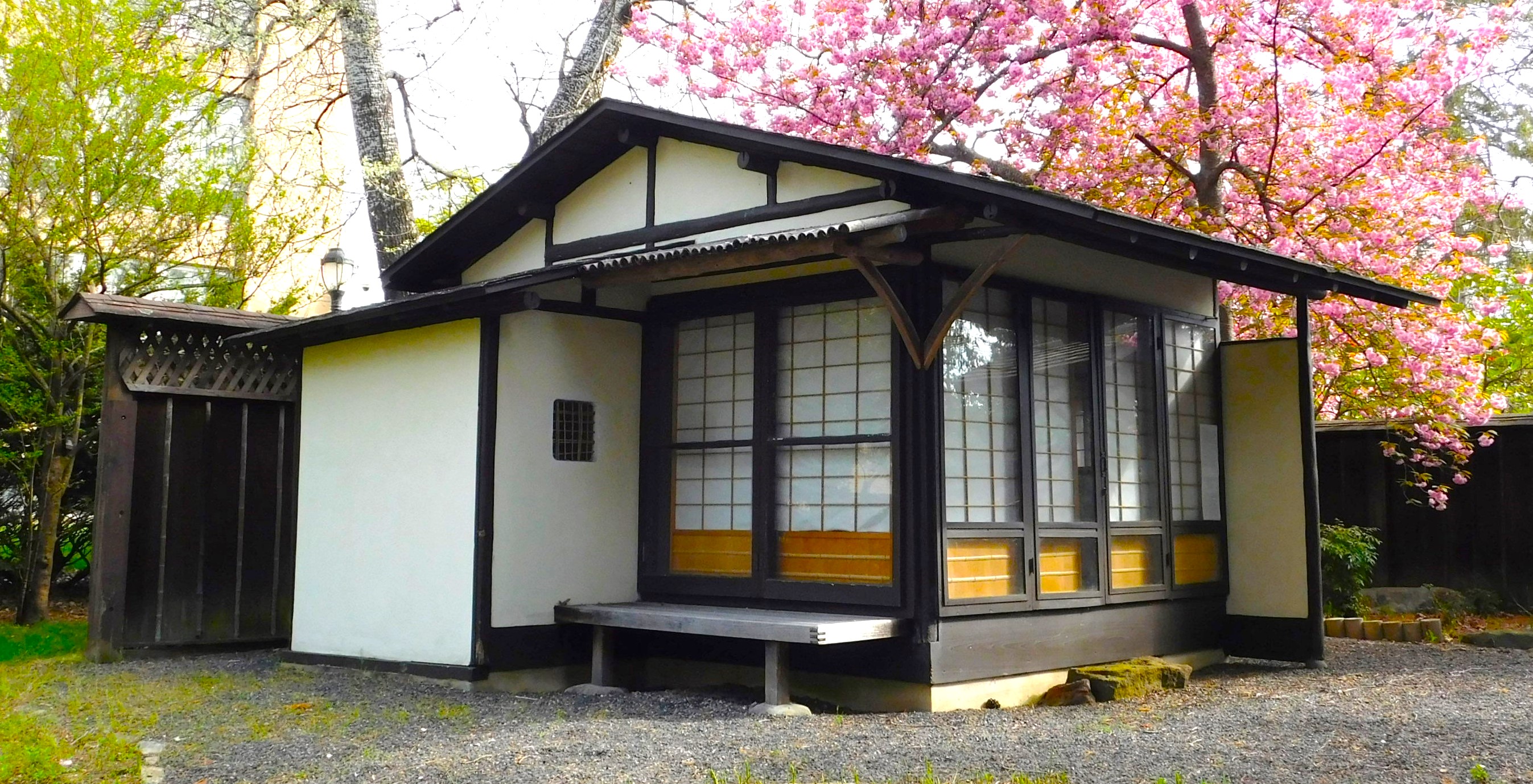
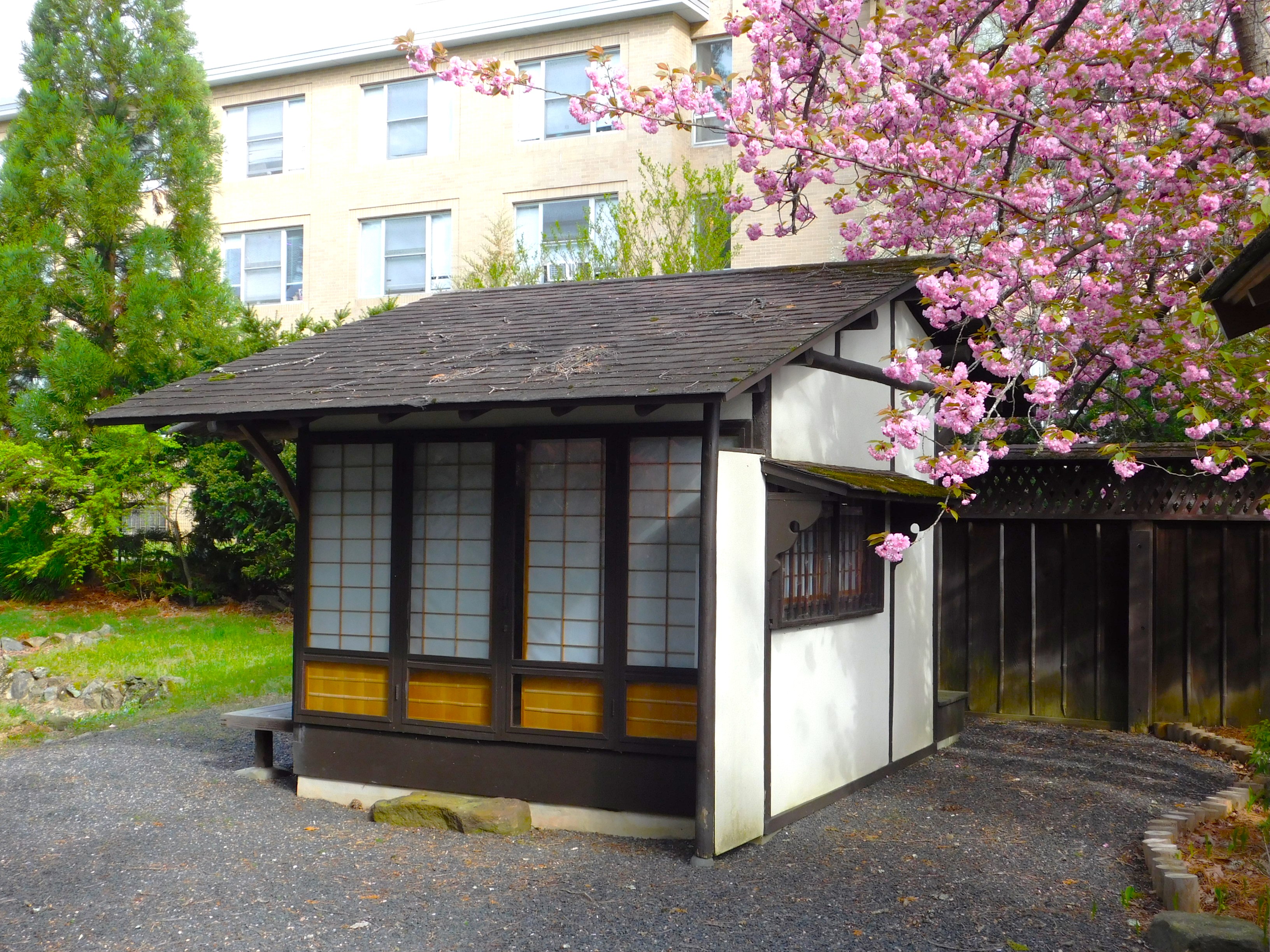
Tea house in Georgian Court University's Japanese Garden
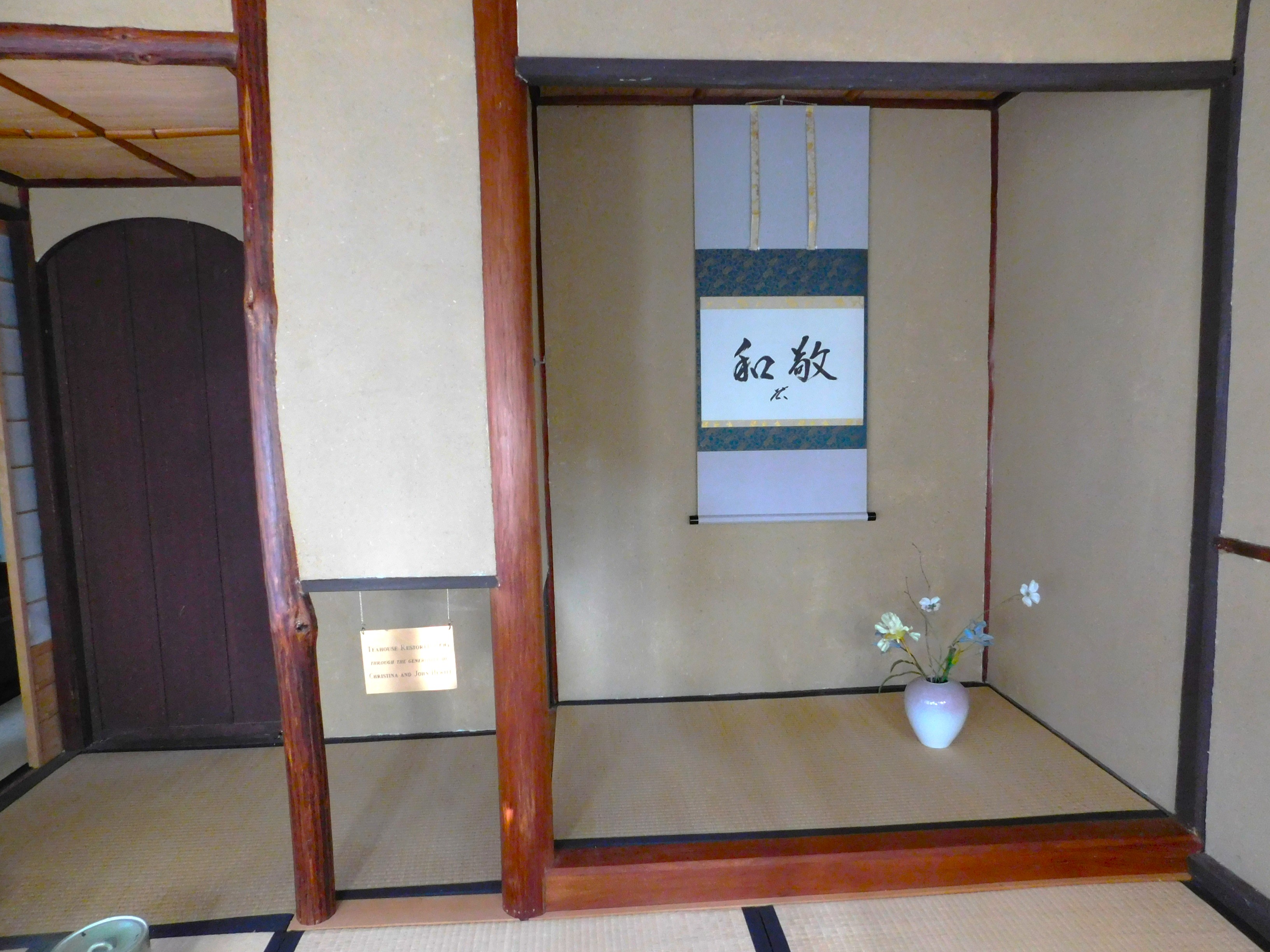
The tea house in the Japanese Garden at Georgian Court University is believed to have been built for the 1910 Japan-British Exhibition in London. Believed to have been designed by architect Hayami-ryu iemoto Soen Sokyu (Niwa no Sokyu, 1840-1924), it may be the earliest authentic tea house in the United States. Based on design and construction details, it was probably constructed in Japan by traditional sukiya-daiku, carpenters specializing in tea house style construction, using only hand tools. Major timbers are likely to be Japanese cedar (sugi, Cryptomeria japonica).
Following the exhibition, it was installed in the Japanese garden designed by Takeo Shiota at the George Gould Estate known as Georgian Court in Lakewood, NJ.
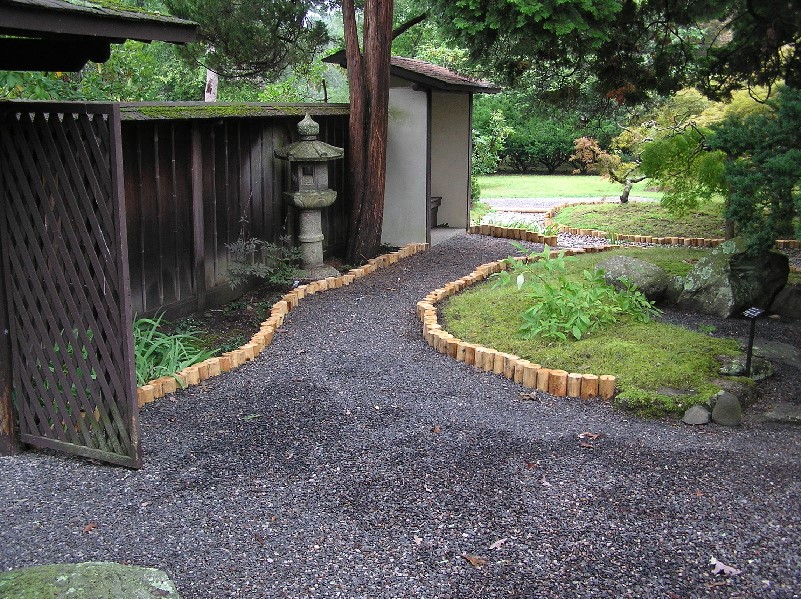
The tea garden includes an outer garden with a winding path that transports visitors over a dry stream bed via a wooden bridge. Upon entering the inner garden via a gate, visitors find a 1910-era machiai and a tsukubai, two more wooden bridges and a stone bridge passing over dry streams, numerous stone lanterns, and a waterfall, with numerous large rocks and hilly topography evoking Japan. The vegetation includes native and exotic conifers, Korean rhododendron, azaleas, camellias, and many cultivars of Japanese maples. The tea garden is part of the more than 100 acres that comprise the Georgian Court University campus, which is a National Historic Landmark.
Between 2014 and 2024, the garden’s wooden bridges and gate were rebuilt and extensive renovations were made to the tea house. This work was done by Peter Wechsler of Daiku Woodworking (Boonsboro, Maryland).
The garden and tea house are open to the public year round at 900 Lakewood Ave., Lakewood, NJ 08701.
Today the teahouse is used for tea ceremonies and other events open to the public.
For more info visit: https://www.georgian.edu/arboretum.